Case Studies
Our team's proven software deployment record

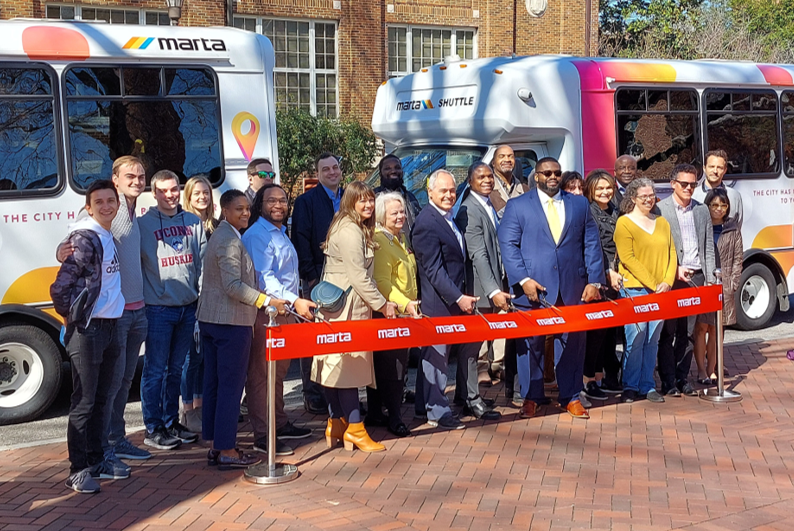
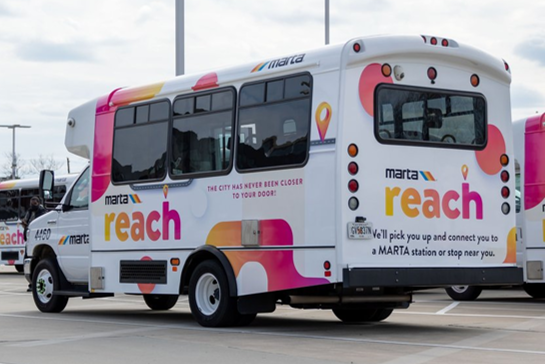
MARTA successfully pilots MARTA Reach, Atlanta's largest on-demand service
 Atlanta, GA
(10x ridership in 6 months)
MARTA introduced MARTA Reach to provide reliable first and last mile connections in underserved neighborhoods, where fixed routes left gaps in access to jobs, healthcare, and essential services. By implementing multimodal on-demand, MARTA integrated dynamic shuttles directly with bus and rail networks, with seamless transfers and extended reach into West Atlanta and Belvedere Park.
This approach delivered efficient, rider-centric mobility that complemented existing high-frequency corridors, resulting in consistently strong adoption and laying the foundation for future network-wide scalability. The success of MARTA Reach led to MARTA significantly expanding on-demand service and inspired the researchers behind the project to commercialize the technology by founding Modal.

It’s perfect, please don’t take it away,
the bus don’t run near my house.
— Atlanta Pilot Rider

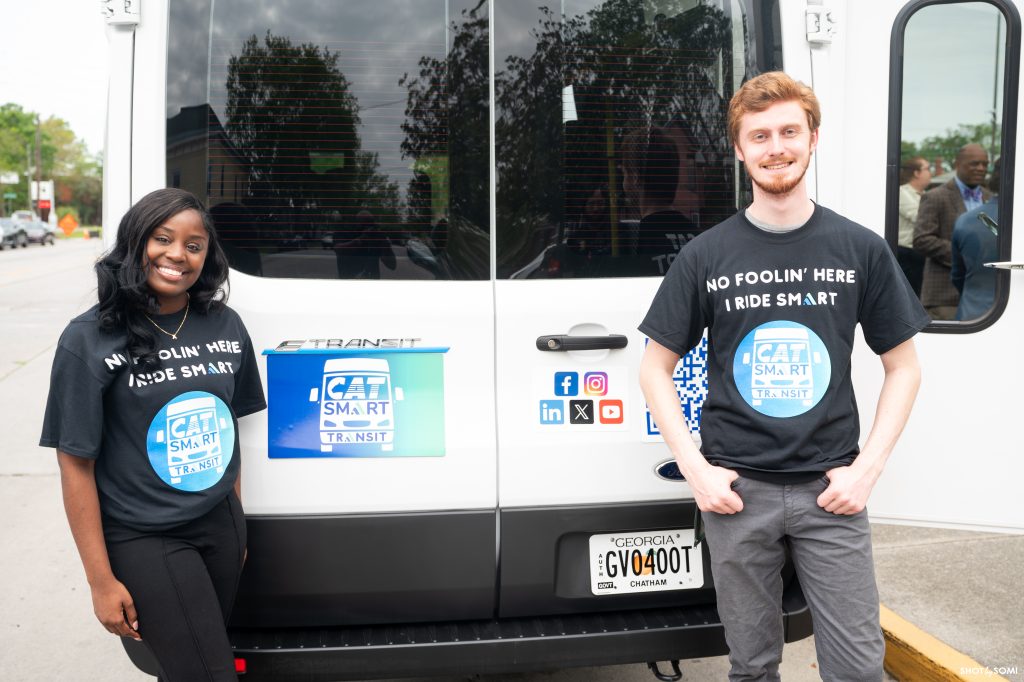
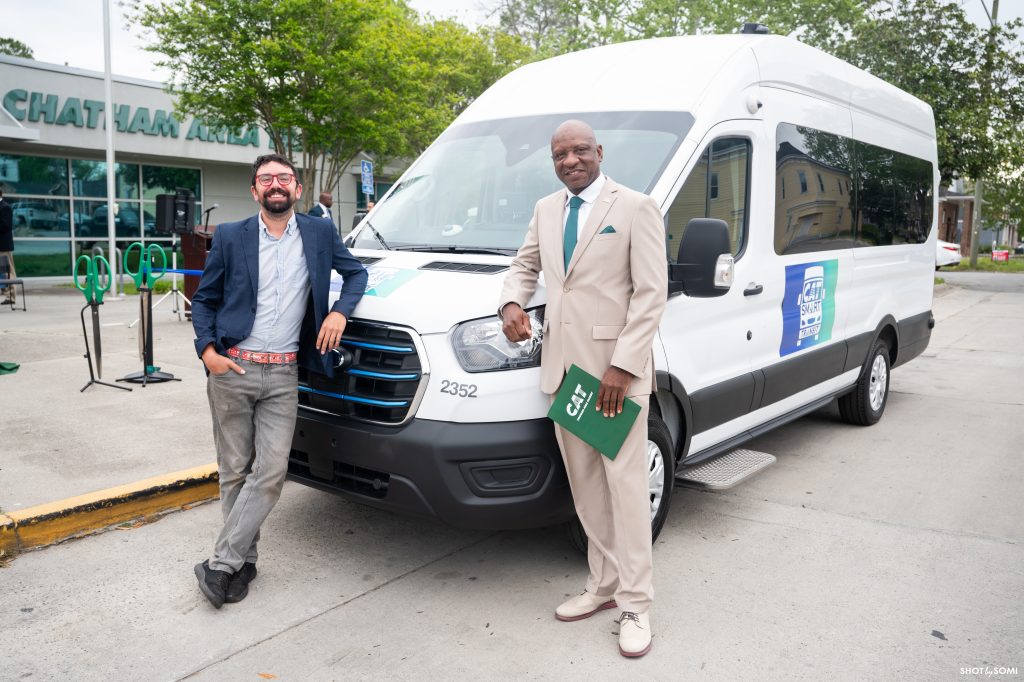
Chatham Area Transit utilizes electric vehicles in award-winning demand response service
Savannah, GAChatham Area Transit sought to modernize its demand-response operations while incorporating sustainable vehicles and improving integration with fixed route services. The CAT SMART multimodal service introduced electric vehicles and advanced dynamic routing, creating a flexible multimodal network that expanded access to transit across Chatham County.
Supported by federal SMART Grant funding alongside Georgia Tech partnerships, this implementation showed the effectiveness of on-demand technology in mid-sized regions, offering a strong framework for improvements in system cost and travel time.
We demonstrated that the technology works. Yes, you can create a multimodal, on-demand transportation system ... other mid-sized cities would also be able to utilize this technology as well.
— Chatham Area Transit's Chief of Planning, Infrastructure and Development

U-M's Reinventing Urban Mobility (RITMO) service offers convenient late-night rides
Ann Arbor, MIThe University of Michigan addressed gaps in late-night campus mobility and parking pressures by piloting a hub-and-shuttle system that combined on-demand shared rides with a well-performing fixed route bus network. Using a whitelabeled app to hail shuttles for evening service on Michigan's North Campus, RITMO provided quick and reliable first/last mile connection, reducing wait times and supporting safer travel during off-peak hours.
RITMO's success demonstrated a practical path to more efficient transit that alleviates infrastructure strain and offers a viable alternative to personal vehicles.
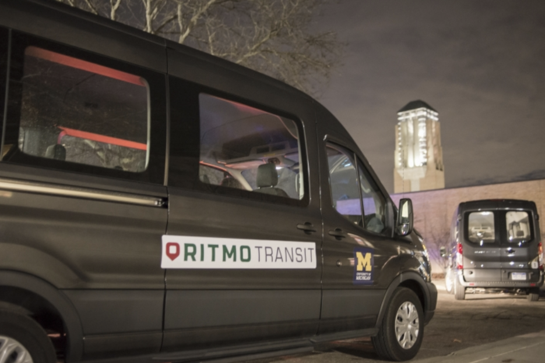
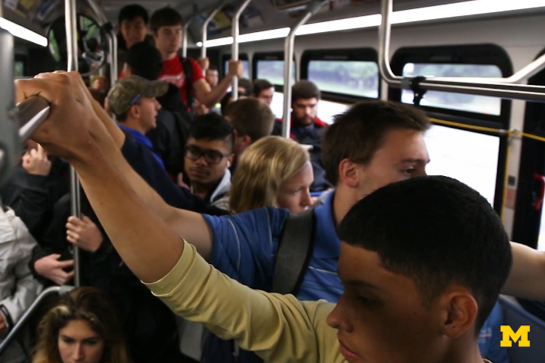
First-of-its-kind ... [RITMO] aims to mash up aspects of Uber-style ride sharing and fixed-route buses to form a more convenient, more efficient and less costly transportation system.
— The Michigan Record
Wilson switches from Via to more affordable multimodal service with broader coverage
Wilson, NCNo metrics - service hasn't started yet
Wilson's prior fixed-route and on-demand system required greater cost efficiency and multimodal integration to sustain long-term operations. The upcoming transition from Via focuses on delivering affordable, citywide coverage with multimodal connections to increase access to employment and community resources, supported by researchers at Georgia Tech and NC State.
This shift positions Wilson to achieve better performance from improved optimization and broader reach, providing smaller agencies with a cost-effective model for flexible, rider-centered transit that adapts to evolving community needs.